Is My Teenager Addicted to Social Media? Signs, Science & What Actually Helps
If you’ve tried to take your teenager’s phone away and been met with an explosion of anger, anxiety, or tears — you’re not alone. Across the UK, parents are increasingly worried about how much time their children spend online, and whether it’s becoming something more than just a habit.
The truth is, for many young people, social media has crossed the line from enjoyment into compulsion. And understanding why that happens is the first step to helping.
Why Social Media Is Designed to Be Addictive
This isn’t about your teenager having weak willpower. Social media platforms are engineered by some of the world’s most sophisticated technology companies to keep users scrolling for as long as possible. The tools they use exploit the same neurological pathways as gambling and other addictive behaviours.
Every notification, like, comment, and new post triggers a small release of dopamine — the brain’s reward chemical. For teenagers, whose brains are still developing and are particularly sensitive to social reward and rejection, this creates a powerful pull that is genuinely difficult to resist.
“The teenage brain is neurologically primed to seek social approval. Social media provides an endless, unpredictable stream of it — which is exactly the condition most likely to create compulsive behaviour.”
The unpredictability is key. Research shows that unpredictable rewards — sometimes you get a flood of likes, sometimes nothing — are far more addictive than consistent ones. This is the same mechanism behind slot machines. Your teenager isn’t being weak; they’re responding to a system deliberately designed to hook them.
Signs Your Teenager May Have an Unhealthy Relationship With Social Media
There’s a difference between heavy use and problematic use. Here are the signs that social media has moved from hobby to compulsion:
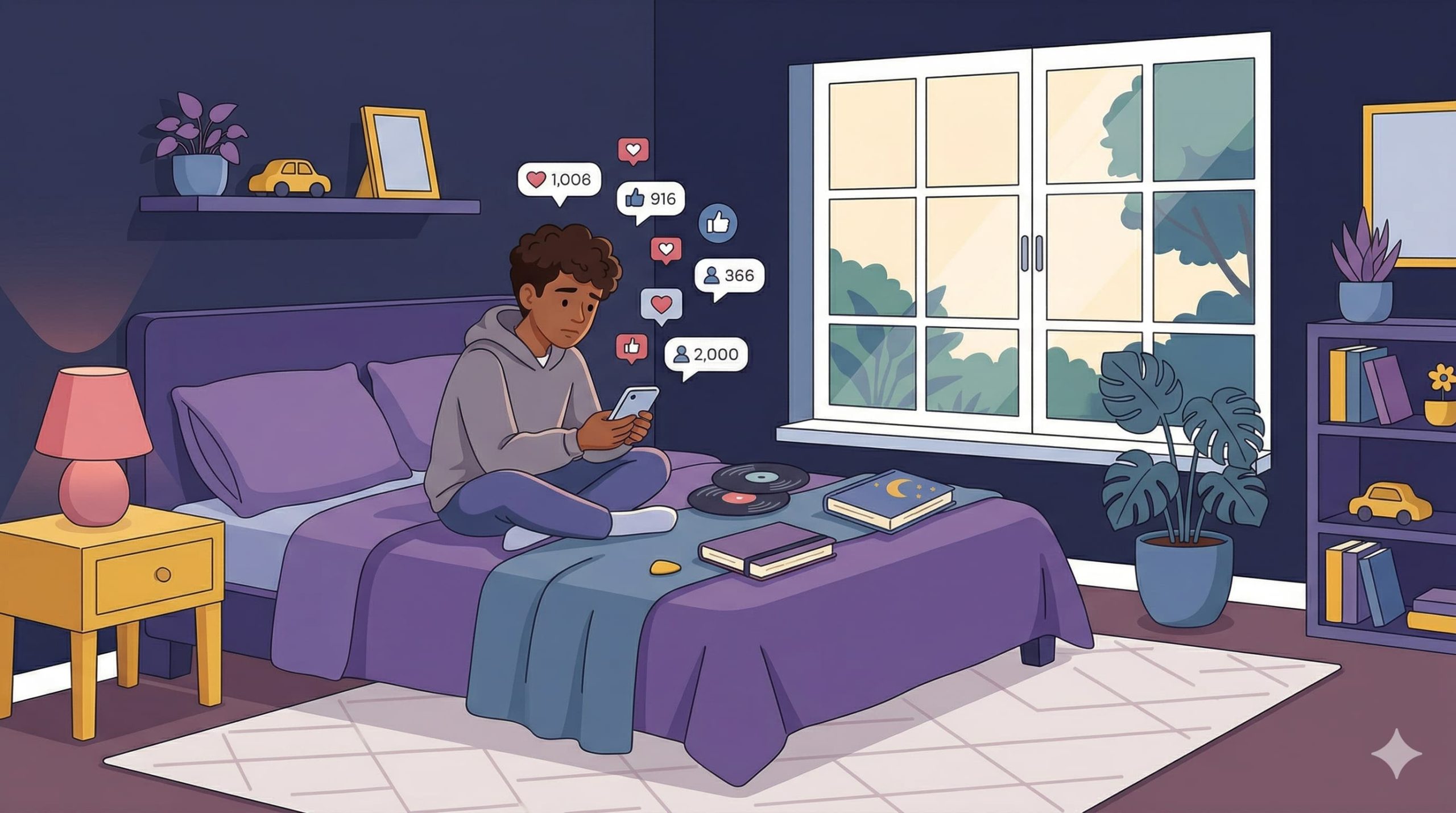
- Checking their phone first thing in the morning and last thing at night
- Feeling anxious, irritable or low when they can’t access social media
- Losing track of time online — intending to spend 5 minutes and spending 2 hours
- Neglecting homework, sleep, hobbies or real-world friendships for social media
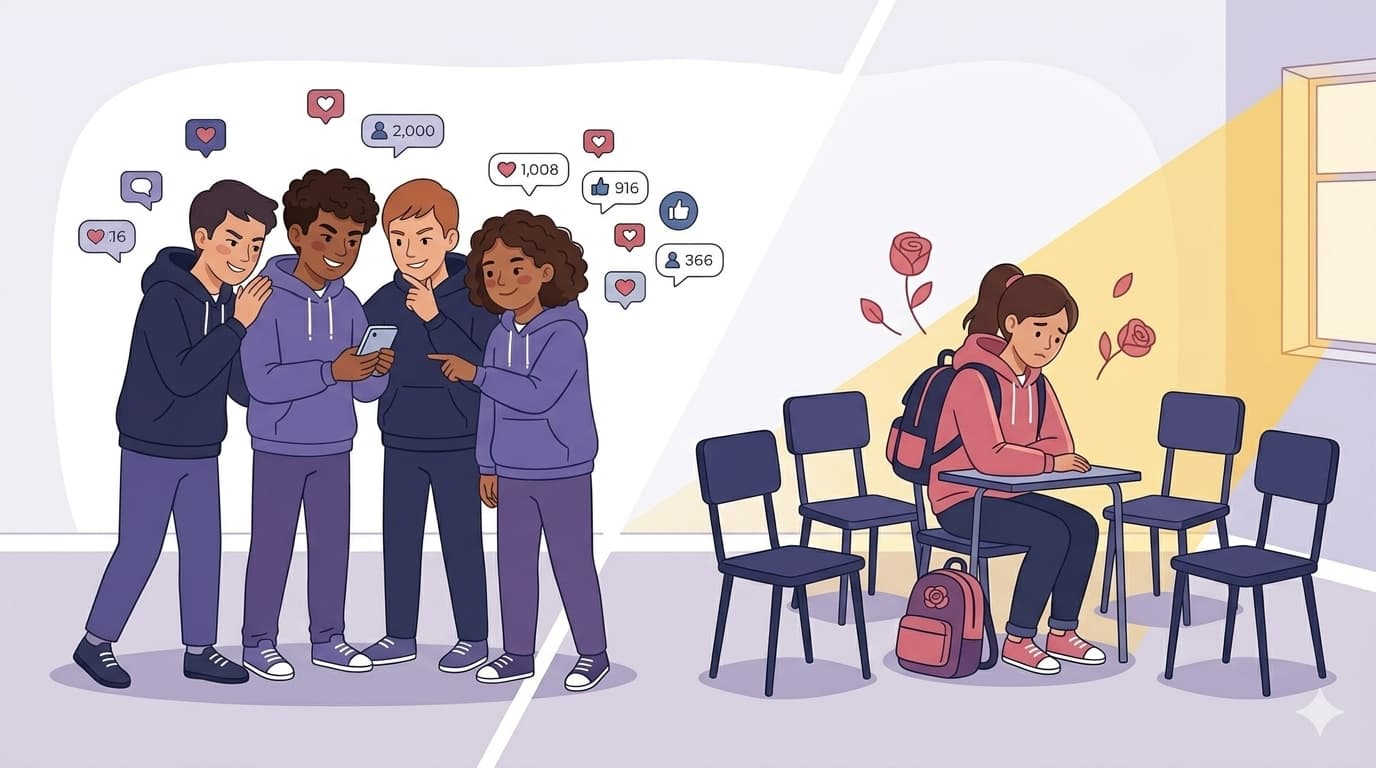
- Comparing themselves negatively to others online and feeling worse about themselves
- Continuing to use social media heavily despite knowing it makes them feel bad
- Becoming defensive or secretive about what they’re doing online
- Physical signs — poor sleep, headaches, eye strain, sedentary behaviour
If several of these apply, it doesn’t mean your teenager has a clinical addiction — but it does mean their relationship with social media is worth taking seriously.
The Impact on Mental Health
The research on social media and teen mental health is significant. Studies consistently show associations between heavy social media use and increased rates of anxiety, depression, and low self-esteem in young people — particularly girls.
- Some of the most documented impacts include:
- Exposure to harmful content — algorithms can lead vulnerable teenagers toward content that reinforces negative self-image or harmful behaviours
- Sleep disruption — the blue light from screens suppresses melatonin, and the emotional stimulation of social media makes it harder to wind down
- Social comparison — teenagers are constantly exposed to carefully curated, filtered versions of other people’s lives, bodies, and achievements
- Fear of missing out (FOMO) — the anxiety that everyone else is having a better time, which drives compulsive checking
- Reduced face-to-face connection — time online displaces the real-world interactions that are essential for healthy development
What Actually Helps — A Practical Guide for Parents
The worst thing you can do is suddenly confiscate your teenager’s phone without explanation. This almost always escalates conflict and damages trust — without addressing the underlying issue.
1. Start with curiosity, not judgment
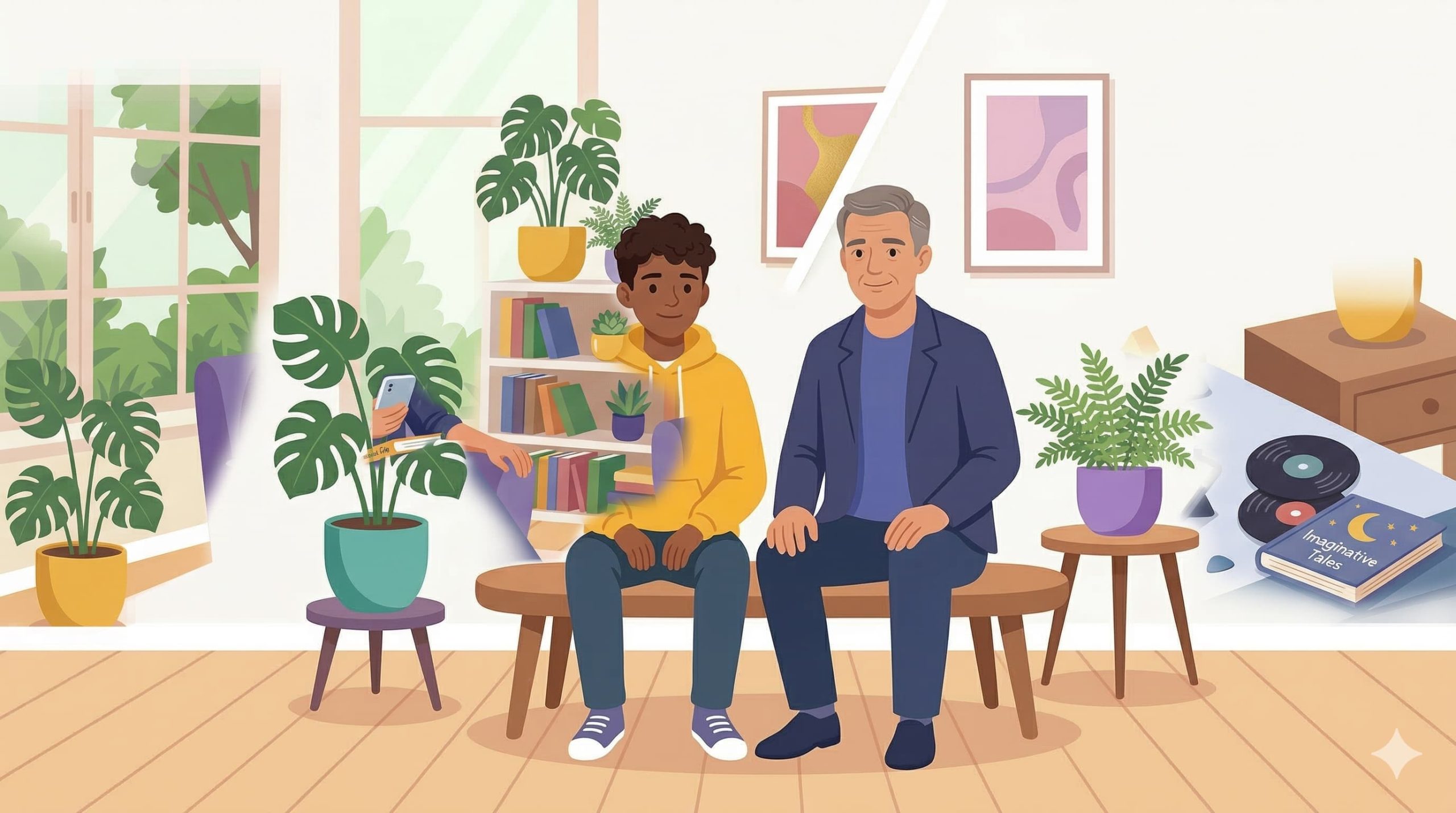
Ask your teenager what they actually enjoy about social media. What platforms do they use? What do they get from it socially? You’re far more likely to make progress if they feel understood rather than attacked. Many teenagers use social media to maintain friendships, follow interests, and express their identity — these are legitimate needs.
2. Have honest conversations about how platforms work
Teenagers are often surprised and genuinely interested to learn about the psychology behind social media design. Explaining that these platforms are engineered to be addictive — and that even adults find them hard to put down — removes the shame and opens up a more honest conversation.
3. Create tech-free spaces and times together
Rather than imposing rules unilaterally, involve your teenager in creating boundaries that feel fair. Many families find success with phone-free meal times, phones charging outside the bedroom overnight, and designated offline hours. Crucially, these rules work best when they apply to the whole family — including parents.
4. Help them build a life they don’t need to escape from
Heavy social media use is often a symptom of something else — boredom, loneliness, anxiety, or a lack of engaging real-world connection. Supporting your teenager to invest in hobbies, friendships, and activities they genuinely care about is one of the most effective long-term interventions.
5. Know when to seek support
If your teenager’s social media use is significantly impacting their mental health, sleep, academic performance, or real-world relationships — and conversations at home aren’t making a difference — it may be time to seek professional support. A Young Person & Family Practitioner can work with both your teenager and your family to understand what’s driving the behaviour and develop a practical plan.
A Note to Teenagers Reading This
If you’re a young person reading this — whether your parent shared it with you or you found it yourself — we want you to know something important: there is nothing wrong with you. The fact that social media is hard to put down isn’t a personal failing. These platforms are designed by adults with huge resources specifically to keep you hooked.
Noticing that your relationship with social media doesn’t feel right is actually a sign of real self-awareness. And that self-awareness is the starting point for change.
At Harmonical Life we work with teenagers navigating the pressures of the digital world — helping them build a healthier relationship with technology and a stronger sense of who they are offline.
— The Harmonical Life Team