
Helping Young People Feel Heard, Understood & Supported
Growing up can bring anxiety, stress, low confidence and emotional difficulties. I offer personalised mental health and wellbeing support for children, teenagers and young adults up to 25.

Helping Young People Feel Heard,
Understood & Supported
Growing up can bring anxiety, stress, low confidence, emotional difficulties and challenges with school, relationships and life changes.
At Harmonicallife, I offer personalised mental health and wellbeing support for teenagers and young adults up to 25, with a holistic approach that considers the young person as a whole.
Read more about my approach Show less
Individual Support
Support can include:
- Anxiety & stress management
- Low mood and emotional wellbeing
- Self-esteem & confidence
- Emotional regulation
- Mindfulness and relaxation
- Creative and mindfulness-based art activities
- Support through life transitions and educational pressures
Sessions are tailored to each young person’s needs and may combine conversation, practical coping strategies, mindfulness, reflection and creative activities.
Supporting Young People & Their Families
Mental health difficulties can affect the whole family. Where appropriate, I can provide guidance to parents and carers, helping them better understand their young person’s experiences and develop supportive ways of responding.
My approach is compassionate, person-centred and collaborative, creating a safe space where young people can express themselves, recognise their strengths and develop practical tools for everyday life.
You don’t have to face it alone.
If you are concerned about a young person’s emotional wellbeing, get in touch to discuss how I may be able to support you.
Contact Me →
Individual Intervention Strategies
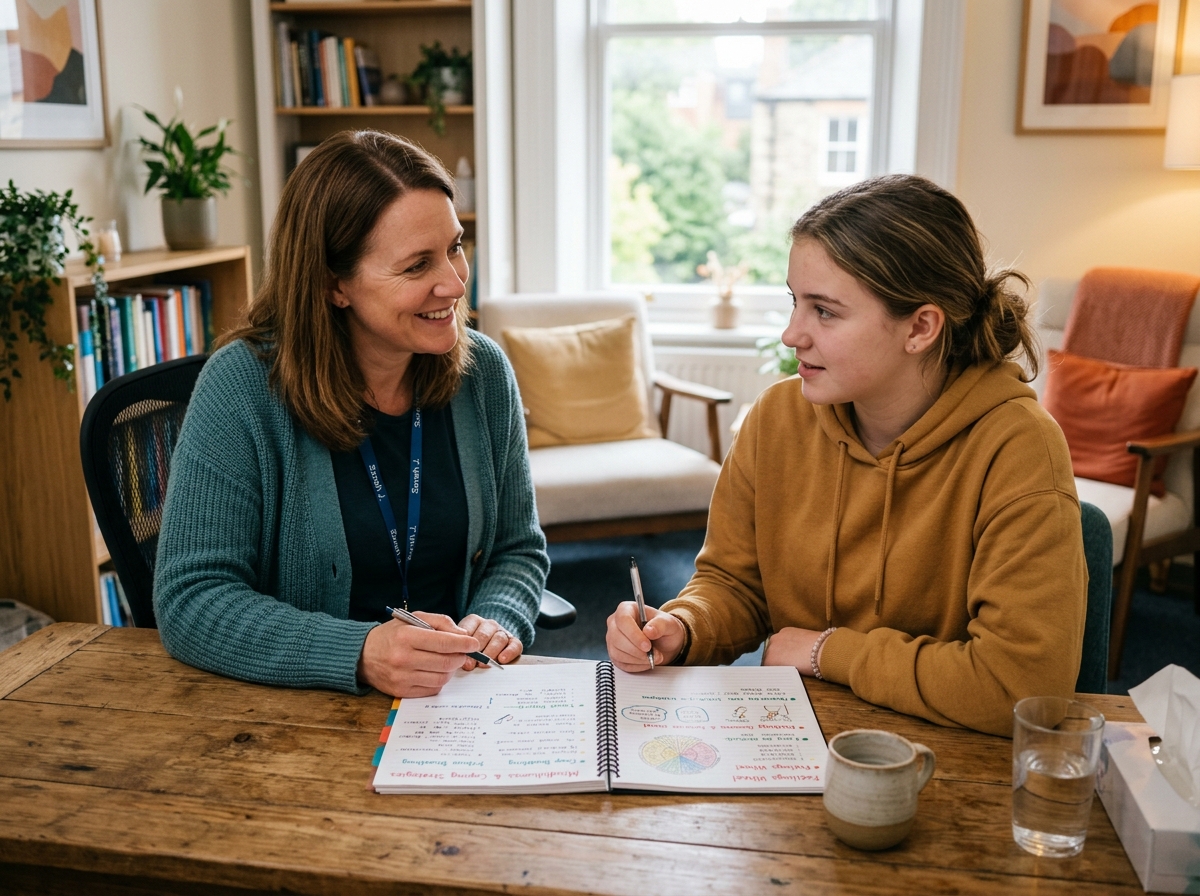
Individual intervention strategies are personalised approaches designed to support a young person’s emotional wellbeing, mental health and everyday functioning. Rather than using a one-size-fits-all approach, each intervention is adapted to the young person’s individual needs, circumstances, strengths and goals.
Working with adolescents and young adults, the process begins by understanding what they are experiencing and identifying the areas where they would like support. Sessions may then introduce practical strategies such as anxiety and stress management, emotional regulation, mindfulness, confidence building, problem-solving and creative activities.
The approach is collaborative and age-appropriate, giving young people the opportunity to develop their own understanding and practical coping skills. Progress is reviewed regularly, with strategies adapted as their needs and circumstances change.
Where appropriate, parents or carers can also be involved, helping create a supportive environment around the young person while respecting their developing independence and confidentiality.
Find out more →
Support for every stage of
the journey
Every child and young person is different. I tailor every intervention to meet them exactly where they are — emotionally, socially, and developmentally.
Therapeutic
Play
Healing through evidence-based guided play and creative activities. I help young people process emotions, experiences, and challenges safely—building resilience and confidence from the inside out.
Behavioural
Support
Challenging behaviour is often a signal of underlying distress. I work collaboratively with young people and families to understand what’s driving the behaviour and build lasting, positive coping strategies.
Mental Health
Assessments
A thorough, compassionate assessment of a young person’s social, emotional, and developmental needs—providing a personalised intervention plan with clear, actionable next steps.
Parent & Carer
Guidance
Mental health difficulties can affect the whole family. I provide a warm, non-judgemental space for parents and carers to build practical toolkits and feel more supported.
Life Transitions
& Pressures
Supporting young people through key life transitions—from educational pressures to navigating young adulthood. I help build the emotional, social, and practical skills they need to navigate change and thrive.
SEMH
Support
Social, Emotional and Mental Health support — helping young people understand emotions, build resilience and develop healthy coping strategies.
Learn More →SEND
Support
Person-centred support for young people with ADHD, autism and other SEND needs — promoting confidence, communication and independence.
Learn More →Mindfulness
& Art
Combining mindfulness practices with creative expression to help young people manage stress and explore emotions in a safe, enjoyable way.
Learn More →Not sure where to
start?
Every family’s situation is unique. Browse the resources or get in touch — I’m here to help you find the right path forward.
View FAQ →Social, Emotional & Mental Health Wellbeing
Social, Emotional and Mental Health (SEMH) wellbeing is about helping children and young people
understand and manage their emotions, build positive relationships, develop confidence and cope
with the challenges of growing up.
It recognises that a young person’s wellbeing can be influenced by their home life, education,
friendships, experiences and wider environment.
The purpose of SEMH support is to provide young people with a safe, supportive space where they can
develop emotional awareness, resilience, self-esteem, healthy coping strategies and positive social
skills.
Through personalised support, young people can learn practical ways to manage emotions, navigate
challenges and build the skills they need to feel more confident and empowered in everyday life.


Special Educational Needs & Disability
Special Educational Needs and Disability (SEND) support recognises that children and young people may learn, communicate, process information and experience the world in different ways. Support can be particularly valuable for young people with ADHD, autism and differences in cognitive development, helping them understand their individual strengths and challenges. The purpose is to provide person-centred, inclusive support that promotes emotional wellbeing, confidence, communication, learning and independence. Strategies can be adapted to each young person’s needs, helping them develop practical skills for managing everyday situations at home, in education and within the wider community.
Growing up has never been
more complicated
Today’s teenagers face pressures that didn’t exist a generation ago — social media, online identity, academic stress, and the challenge of finding their place in an increasingly complex world. These pressures are real, and they can have a serious impact on mental health and wellbeing.
At Harmonical Life, I work with teenagers and young adults up to 25 using evidence-based, teen-centred approaches — creating a safe, non-judgemental space where they feel genuinely heard. No lectures. No pressure. Just real support.


Your family's wellbeing is at the heart of everything
At Harmonical Life, I am a dedicated Children & Young People Mental Health Practitioner with a passion for helping children, teenagers, and their families navigate life's challenges and find their way to a brighter future.
My approach is holistic, compassionate, and always tailored to the individual. I conduct thorough assessments of each young person's needs and circumstances, then formulate personalised intervention plans that promote mental health, wellbeing, and positive development.
I work collaboratively with families, schools, and other agencies to ensure a coordinated approach — because the best outcomes happen when everyone works together. My goal is always to provide evidence-based support while building trusting, respectful relationships with every family I work with.
Finding the Right Support
An assessment with a Children and Young People Mental Health Practitioner can help build a clearer understanding of a young person's emotional wellbeing, strengths, difficulties and support needs.
A personalised assessment can help individuals and families identify what type of support may be most appropriate, whether that involves practical wellbeing strategies, support within education or community services, or seeking further help from the NHS or other specialist services.
The purpose is not to provide an NHS diagnosis or replace an NHS assessment, but to help families understand their concerns, identify appropriate next steps and communicate their needs more clearly when seeking further support.
Where concerns indicate that specialist or urgent mental health support may be required, appropriate signposting or referral to relevant services can be recommended.
Book an Assessment →